How AI Is Transforming Online Education Marketing

Online Education Marketing is changing rapidly as educational institutions, e-learning platforms, and online course creators adopt artificial intelligence to reach and engage students more effectively. AI can analyze large amounts of learner data, automate repetitive marketing tasks, personalize communication, and help marketers understand what prospective students need.
Traditional marketing often depends on broad audience targeting and manual campaign management. AI introduces a more data-driven approach that allows education brands to deliver relevant content at the right stage of the student journey. From personalized recommendations to automated communication, AI is helping education providers build more meaningful digital experiences.
As competition in online education continues to increase, understanding how AI can support marketing activities has become increasingly important. Organizations that combine AI technology with a clear marketing strategy can improve efficiency while creating more relevant experiences for prospective and existing learners.
The Growing Role of AI in Online Education Marketing
AI is becoming an important part of modern education marketing because it can process information much faster than traditional manual methods. Marketing teams can use AI-powered systems to identify audience patterns, analyze campaign performance, predict potential student interests, and automate communication.
This technology can support several stages of the marketing funnel, including awareness, consideration, enrollment, and retention. Instead of treating every potential learner the same way, AI allows marketers to develop more personalized campaigns based on behavior, interests, previous interactions, and content engagement.
AI-Powered Audience Analysis
Understanding the target audience is essential for any successful education campaign. AI can analyze website visits, search behavior, content interactions, email activity, and other available marketing signals to identify audience segments.
These insights can help education providers understand which courses attract particular groups of learners. Marketers can then create more relevant campaigns instead of relying entirely on assumptions about their audience.
Predictive Marketing Insights
AI can also identify patterns that may indicate future behavior. For example, a learner who repeatedly visits a course page, watches related videos, and downloads course information may demonstrate strong interest.
Marketing teams can use these insights to create timely follow-up campaigns. Predictive analysis can therefore help organizations allocate marketing resources more efficiently while improving communication with prospective students.
How AI Improves Course Marketing Strategy
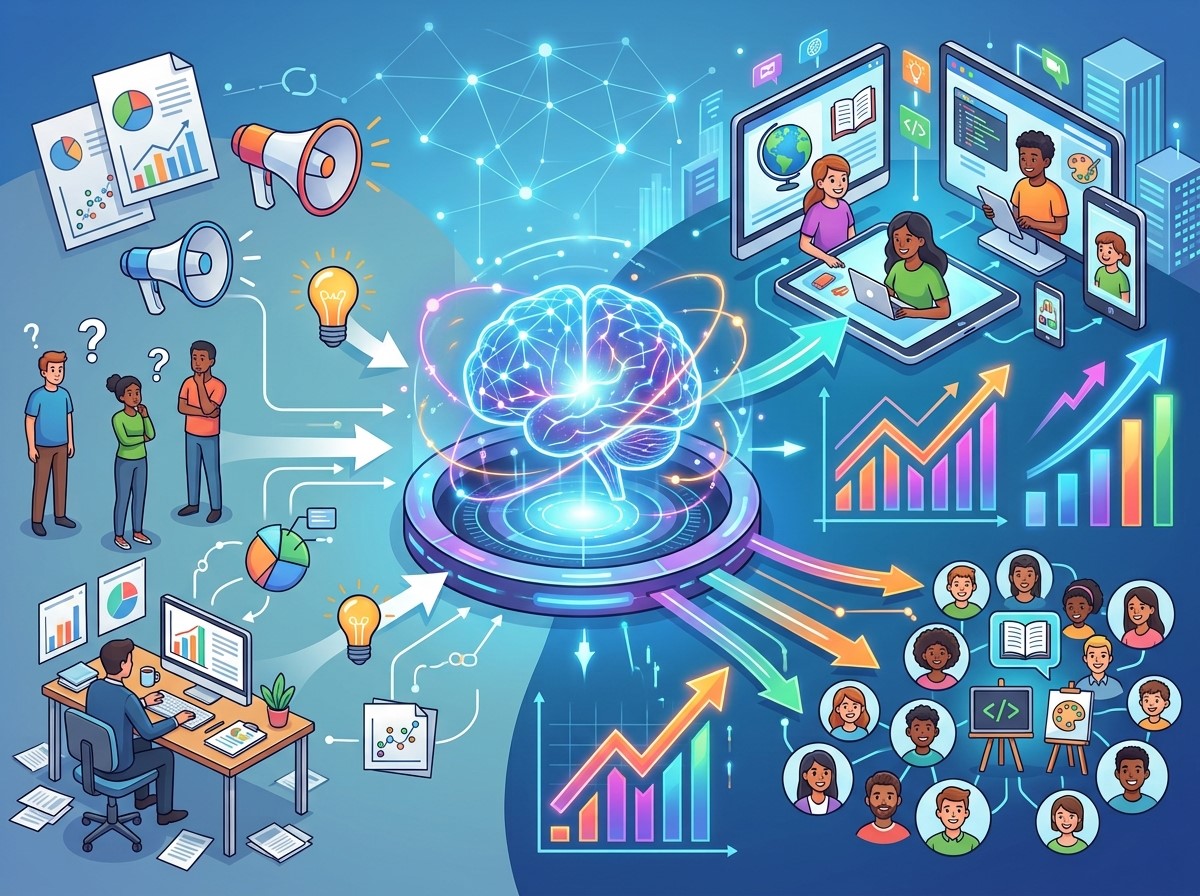 A strong Course Marketing Strategy needs to connect the right course with the right audience. AI can make this process more efficient by analyzing learner data and identifying which messages, channels, and content formats are most relevant.
Instead of creating one general campaign for everyone, education providers can use AI to develop different marketing experiences for different audience groups. This approach can make course promotion more personalized and potentially improve engagement throughout the enrollment journey.
Personalized Course Recommendations
AI-powered recommendation systems can analyze learner interests and previous activity to suggest relevant courses. For example, someone who frequently explores digital marketing content may receive recommendations for SEO, social media marketing, or analytics courses.
Personalized recommendations can make course discovery easier. They can also help learners find educational opportunities that align with their interests, professional goals, or previous learning behavior.
Smarter Audience Segmentation
AI can divide large audiences into meaningful segments based on available behavioral and demographic information. Segments might include new visitors, returning visitors, highly engaged prospects, current students, or inactive learners.
Each group can receive different messaging. New visitors may need introductory information, while highly engaged prospects may respond better to course details, instructor information, testimonials, or enrollment reminders.
AI and Online Learning Marketing
Online Learning Marketing increasingly depends on digital channels such as search engines, social media, email, video platforms, and educational websites. AI can help marketers manage these channels by analyzing performance and identifying opportunities for optimization.
AI-powered tools can evaluate content engagement, audience behavior, and campaign results. These insights allow marketing teams to make informed adjustments rather than depending solely on manual analysis.
AI-Driven Content Personalization
Different learners may respond to different types of educational content. Some may prefer video lessons, while others may engage more with articles, guides, webinars, or downloadable resources.
AI can analyze engagement patterns and help marketers recommend suitable content formats. Personalized content experiences can make online learning brands more relevant to individual users.
Automated Email Marketing
Email marketing remains useful for education providers, especially when communicating with prospective students. AI can help automate email sequences based on user actions.
For example, someone who downloads a course guide may receive educational information first, followed by instructor details, course benefits, and an enrollment reminder. Automated sequences can maintain communication without requiring marketers to manually send every message.
AI-Powered Online Course Promotion
Effective Online Course Promotion requires visibility, relevant messaging, and consistent engagement. AI can support promotional activities by helping marketers identify audiences, create campaign variations, optimize content, and analyze results.
AI does not replace the need for a strong educational offer. Instead, it can help marketers present that offer more effectively to audiences who are likely to find it relevant.
Intelligent Advertising Optimization
Paid advertising platforms increasingly use machine learning to optimize campaign delivery. Education marketers can use available AI-driven advertising capabilities to analyze audience signals and improve campaign targeting.
Marketing teams can test different headlines, descriptions, creative formats, and landing pages. Performance data can then help determine which variations generate stronger engagement.
AI-Generated Marketing Content
AI tools can assist marketers with content ideation, outlines, ad copy, email drafts, social media posts, and other promotional materials. This can reduce the time required for repetitive content production.
However, human review remains important. Educational marketing content should be accurate, useful, authentic, and aligned with the institution or course provider’s actual offerings.
Using AI Chatbots to Engage Prospective Students
AI chatbots can provide immediate answers to common questions from prospective learners. They can operate on websites and other digital channels, helping visitors find information without waiting for a marketing or admissions representative.
Chatbots can answer questions about course duration, enrollment processes, learning formats, schedules, pricing information, and other frequently requested details when the relevant information is available.
24/7 Student Assistance
One major advantage of AI chatbots is continuous availability. Prospective students may visit an education website outside traditional office hours. A chatbot can provide basic information during those periods.
This can reduce delays and help visitors continue their research. More complex questions can be transferred to human staff when necessary.
Lead Qualification
AI chatbots can also collect basic information from prospective learners. For example, a chatbot may ask about a visitor’s interests, preferred course category, learning goals, or preferred study format. These responses can help marketing and admissions teams understand which visitors may require further communication.
AI for Search and Content Marketing
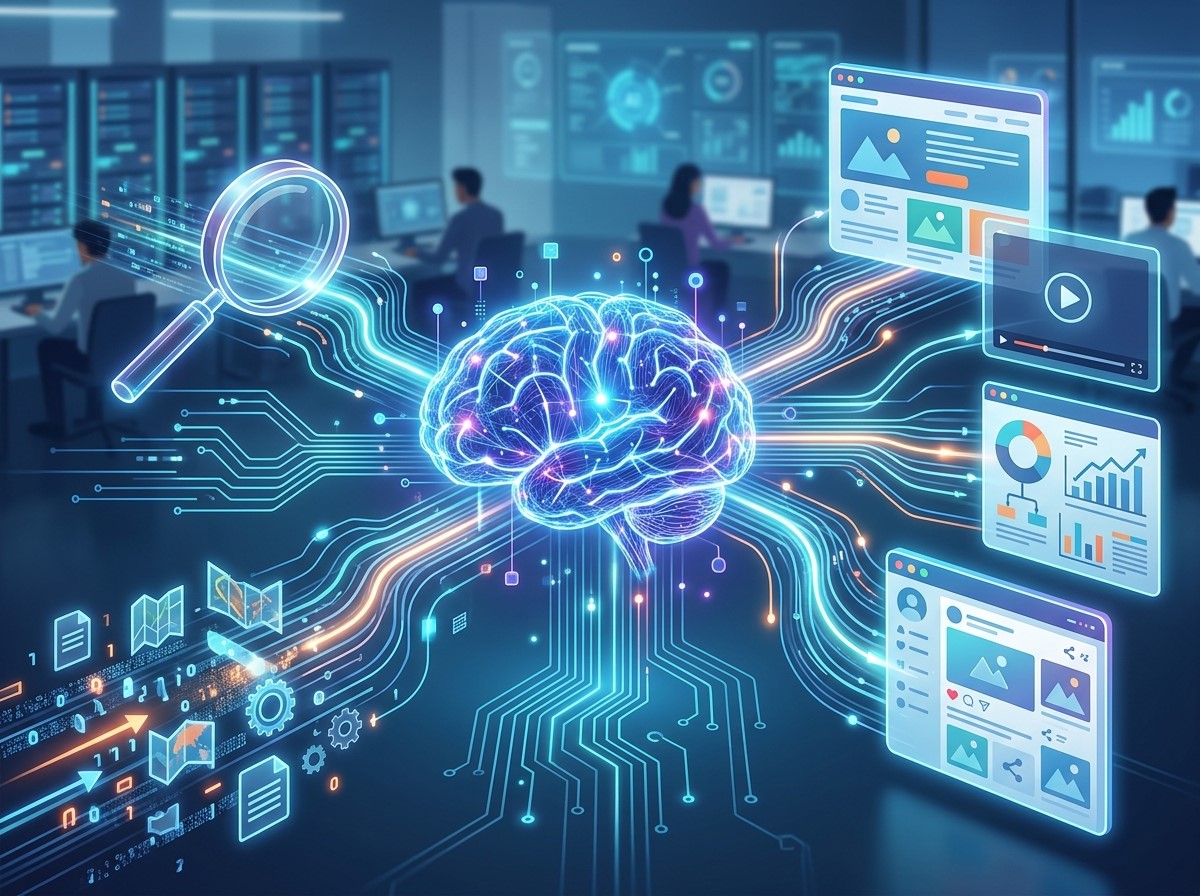 Search visibility is important for online education providers because many prospective students begin their research through search engines. AI can support SEO teams by identifying search patterns, content gaps, related topics, and potential questions.
AI-assisted analysis can help marketers develop content that answers real learner questions instead of creating pages only around individual keywords.
Smarter Keyword and Topic Research
AI tools can help identify related search terms and topic clusters around educational subjects. Marketers can use these insights to build comprehensive content strategies.
For example, an education provider promoting a digital marketing course could create content around career opportunities, required skills, certifications, course comparisons, practical projects, and learning pathways.
Personalized Content Experiences
AI can also support dynamic content experiences based on visitor behavior. Returning visitors may see content related to subjects they previously explored, while new visitors may receive introductory information.
When implemented carefully, personalization can help users navigate large amounts of educational information more efficiently.
AI and Student Journey Optimization
The student journey often begins long before enrollment. A prospective learner may discover an institution through search, interact with social media content, visit the website, download resources, compare courses, and eventually register.
AI can help marketers understand these interactions across different stages. By analyzing customer journey data, education providers can identify where potential students lose interest and where communication can be improved.
Identifying Enrollment Barriers
If many visitors reach an enrollment page but do not complete registration, marketers can investigate potential barriers. These may include unclear information, complicated forms, unexpected costs, or insufficient trust signals.
AI-powered analytics can identify behavioral patterns that deserve further investigation. Human teams can then test improvements to the relevant pages or processes.
Improving Retention Communication
Marketing does not necessarily end after enrollment. Educational organizations can use AI to personalize communication with existing students.
Relevant reminders, learning resources, progress-related messages, and program information can help maintain engagement throughout the student lifecycle.
Measuring AI-Driven Marketing Performance
AI can simplify marketing analysis by processing large amounts of campaign data and identifying patterns. Education marketers can monitor metrics such as website engagement, lead generation, email interactions, course-page visits, and enrollment activity.
The goal should not simply be collecting more data. Marketers need to connect performance metrics with specific business and educational objectives.
Real-Time Campaign Analysis
AI-supported analytics can help marketers monitor campaigns more frequently. If a particular message or channel performs differently than expected, marketers can investigate and make adjustments.
This creates a more flexible marketing process where decisions can be informed by current campaign data rather than relying only on historical reports.
Understanding Learner Behavior
Behavioral analysis can reveal how prospective students interact with educational content. Marketers can use these insights to understand which topics attract attention and which stages of the funnel require improvement. These findings can influence future content, advertising, email campaigns, and landing-page strategies.
Challenges of Using AI in Online Education Marketing
Although AI offers many marketing opportunities, organizations should also consider its limitations. AI systems depend on the quality of the data they receive. Poor-quality or incomplete data can produce misleading insights.
Privacy is another important consideration. Education providers should handle learner information responsibly and follow applicable privacy requirements.
Maintaining Human Oversight
AI-generated content and automated recommendations should be reviewed by people. Human oversight helps ensure that marketing messages remain accurate, respectful, useful, and consistent with the institution’s identity.
Education marketing also involves trust. Prospective students may make significant financial and career decisions based on information presented by an institution, making accuracy particularly important.
Avoiding Excessive Automation
Automation can improve efficiency, but excessive automation may make communication feel impersonal. Education providers should balance automated experiences with meaningful opportunities for human interaction.
The most effective approach is often to use AI for repetitive analysis and tasks while allowing human teams to handle complex decisions and relationship-building.
The Future of AI in Online Education Marketing
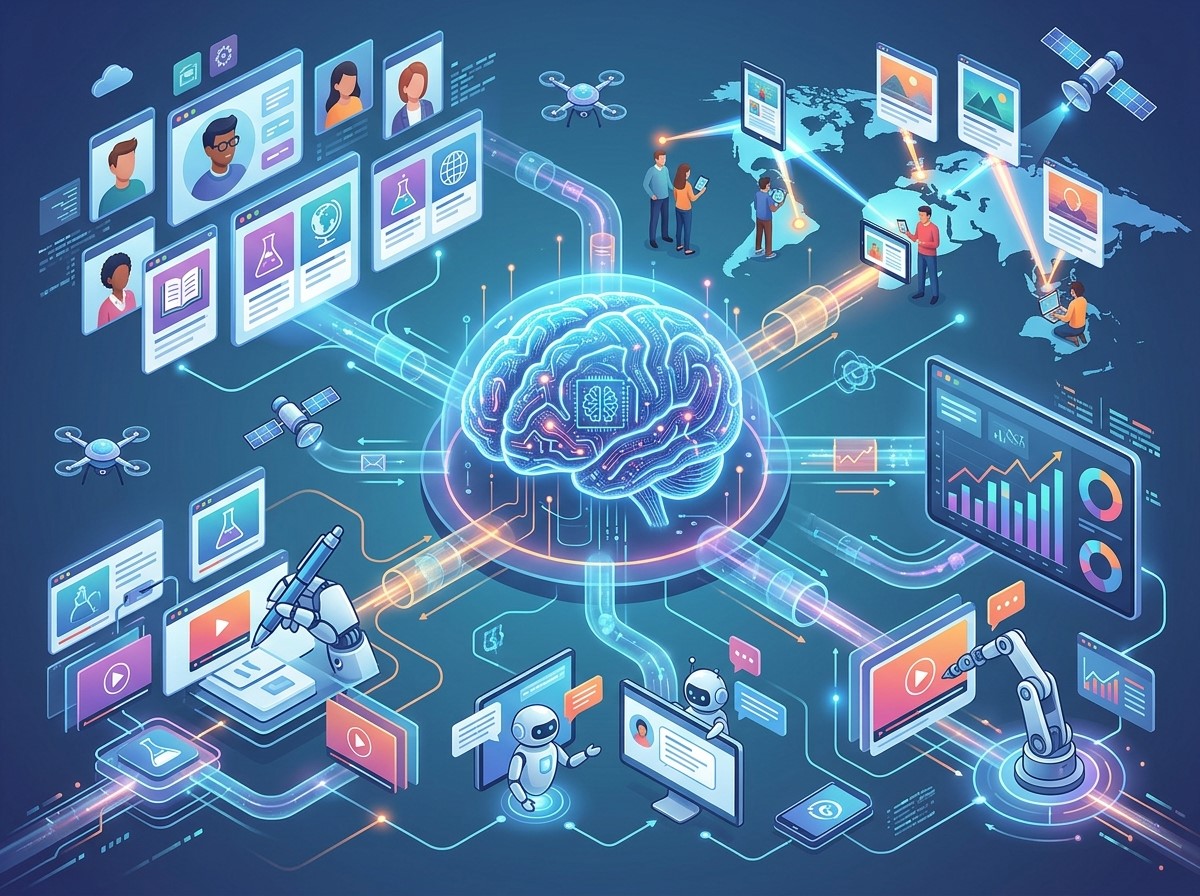 AI is likely to continue influencing how educational organizations attract, engage, and retain learners. Future marketing systems may become increasingly capable of understanding user intent, personalizing experiences, automating workflows, and connecting data from multiple marketing channels.
However, technology alone will not determine marketing success. Educational providers still need valuable courses, clear communication, credible instructors, useful content, and a strong understanding of their learners. Organizations that combine these fundamentals with responsible AI adoption can create more efficient and personalized marketing experiences. The future of Online Education Marketing will likely involve closer collaboration between intelligent technology and human expertise.
Conclusion
AI is transforming Online Education Marketing by changing how educational organizations understand audiences, personalize communication, promote courses, automate repetitive activities, and measure campaign performance. From AI chatbots and predictive analytics to personalized recommendations and automated content, these technologies can support almost every stage of the student journey.
A successful approach requires more than simply adopting AI tools. Education providers need a clear Course Marketing Strategy, effective Online Learning Marketing practices, and relevant Online Course Promotion campaigns supported by accurate data and human oversight. When technology is combined with useful educational content and authentic communication, AI can become a valuable part of a modern education marketing ecosystem.
Frequently Asked Questions
1. What is AI in Online Education Marketing?
AI in Online Education Marketing refers to using artificial intelligence technologies to analyze audience behavior, personalize marketing, automate communication, optimize campaigns, and improve student engagement.
2. How does AI improve online education marketing?
AI can analyze large amounts of marketing data, identify audience patterns, personalize content, automate repetitive tasks, and provide insights that help marketers improve their campaigns.
3. Can AI help promote online courses?
Yes. AI can support Online Course Promotion by helping marketers identify relevant audiences, personalize promotional messages, optimize advertising campaigns, and analyze campaign performance.
4. How does AI support a Course Marketing Strategy?
AI can help a Course Marketing Strategy by identifying audience segments, analyzing learner behavior, recommending content, automating communication, and providing campaign performance insights.
5. What is Online Learning Marketing?
Online Learning Marketing involves promoting digital education programs, courses, platforms, and learning services through channels such as search engines, social media, email, content marketing, and paid advertising.
6. Can AI chatbots help education providers?
AI chatbots can answer common questions, provide basic course information, collect prospective student details, and offer support outside traditional business hours.
7. How can AI personalize education marketing?
AI can analyze available user behavior and interactions to provide more relevant course recommendations, content, emails, advertisements, and other marketing communications.
8. Does AI replace education marketing professionals?
AI does not necessarily replace marketing professionals. It can automate repetitive activities and provide analytical support while human marketers remain responsible for strategy, creativity, judgment, and relationship-building.
9. What are the challenges of using AI in education marketing?
Important challenges include data quality, privacy, inaccurate AI-generated information, excessive automation, and maintaining authentic communication with prospective and current learners.
10. What is the future of AI in Online Education Marketing?
The future is likely to include greater personalization, predictive analytics, automated workflows, intelligent chatbots, and integrated marketing systems. Human oversight will remain important for accuracy, trust, and strategic decision-making.