Course Sales Funnel Techniques for Growing Course Revenue
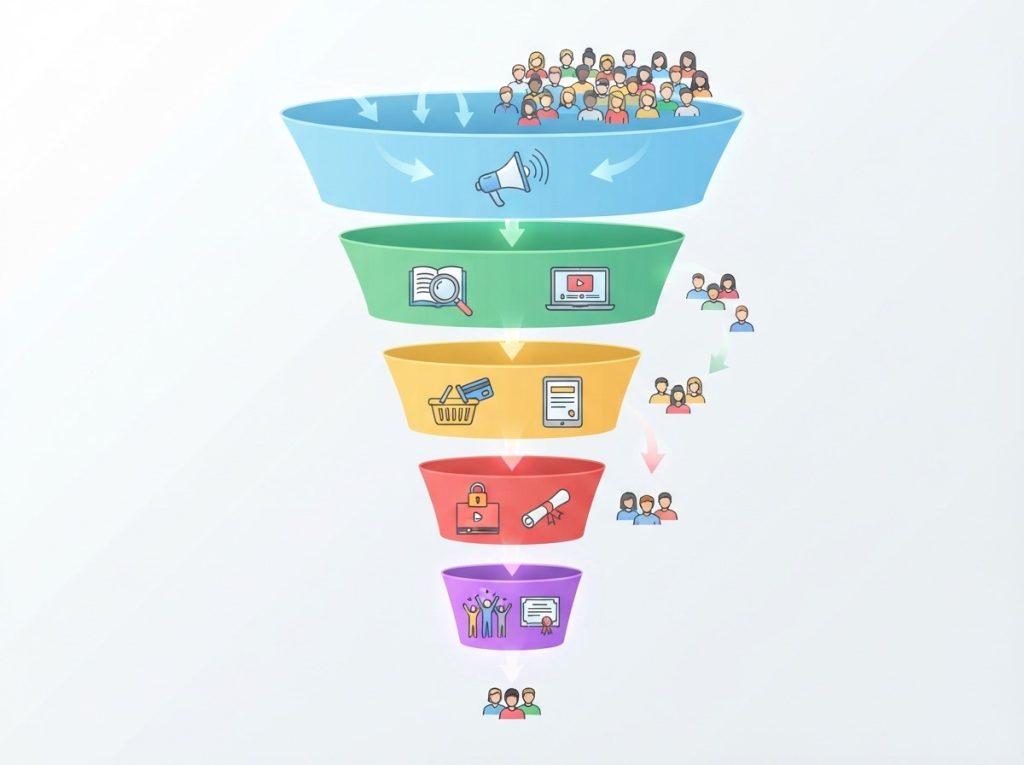
A well-structured sales funnel can help course creators attract the right audience, build trust, and guide potential students toward enrollment. Course Sales Funnel Techniques for Growing Course Revenue are especially valuable for educators who want to turn website visitors, social media followers, and leads into paying students through a strategic customer journey.
A successful funnel does more than promote a course. It introduces the audience to the course topic, communicates its value, addresses common concerns, and creates clear opportunities to enroll. When combined with a strong Course Launch Strategy, effective Online Learning Marketing, and consistent Online Course Promotion, a sales funnel can support sustainable course growth and revenue.
What Is a Course Sales Funnel?
A course sales funnel is a structured marketing journey that moves potential students from initial awareness to course enrollment. Each stage has a specific purpose, such as attracting prospects, educating them, building trust, handling objections, and encouraging a purchase decision.
Understanding the Main Funnel Stages
The typical funnel includes awareness, interest, consideration, conversion, and retention. At the awareness stage, potential learners discover your content or course brand. Interest develops when they engage with useful information. Consideration happens when they evaluate your course, while conversion occurs when they enroll.
Retention is also important because satisfied students can purchase additional courses, renew memberships, or recommend the program to others. Therefore, a course funnel should not stop immediately after enrollment.
Build a Strong Course Launch Strategy
 A strategic launch gives your funnel a clear direction and helps create momentum before the course becomes available. Instead of promoting the course randomly, creators can prepare content, landing pages, email campaigns, and promotional offers around specific launch milestones.
Create Pre-Launch Awareness
Start building awareness before asking people to purchase. Publish educational content related to the course topic and highlight problems that your course can help solve.
Webinars, short videos, blog posts, free guides, and social media content can introduce potential students to the subject. This approach gives prospects useful information while gradually increasing their interest in the upcoming course.
Develop a Clear Launch Timeline
A launch timeline helps coordinate marketing activities. Decide when to publish educational content, open a waitlist, announce enrollment, send promotional emails, and close an introductory offer.
A consistent timeline also makes it easier to measure performance. You can identify which activities generate the most leads and which stages require further optimization.
Strengthen Online Learning Marketing
Online Learning Marketing focuses on reaching learners through digital channels and communicating why a particular educational product is valuable. Effective marketing should connect course benefits with the needs, goals, and challenges of the intended audience.
Understand Your Target Students
Before building promotional campaigns, identify who your ideal students are. Consider their experience level, learning goals, professional needs, common challenges, and preferred learning formats.
Understanding your audience allows you to create more relevant messaging. A course designed for beginners may require different content and offers than an advanced professional training program.
Create Educational Content
Educational content can become one of the strongest entry points into a course funnel. Blog articles, tutorials, videos, webinars, checklists, and downloadable resources can demonstrate expertise before a prospect makes a purchase.
Instead of making every piece of content promotional, focus on solving real problems. Helpful content can build credibility and encourage readers to explore the course naturally.
Optimize Your Course Landing Page
The landing page is often one of the most important conversion points in a course funnel. It should quickly communicate what the course offers, who it is for, what students will learn, and why the program is worth considering.
Communicate the Course Value Clearly
A strong headline should immediately explain the primary benefit of the course. Supporting sections can describe learning outcomes, course modules, instructor expertise, bonuses, student support, and other relevant benefits.
Avoid making the page unnecessarily complicated. Prospective students should be able to understand the offer without searching through multiple sections.
Add Trust-Building Elements
Trust can strongly influence an enrollment decision. Student testimonials, reviews, instructor credentials, course previews, case studies, and transparent information about the learning experience can reduce uncertainty.
If the course is new and does not have testimonials yet, consider providing a sample lesson, preview module, or free educational resource that allows prospects to experience the quality of your content.
Improve Online Course Promotion
 Online Course Promotion should extend beyond simply posting a course link on social media. A strong promotional system uses multiple channels to repeatedly communicate the course value while matching messages to different stages of the buyer journey.
Use Social Media Strategically
Social media platforms can help generate awareness and drive prospects into your funnel. Share educational posts, short videos, student questions, course insights, behind-the-scenes content, and relevant discussions.
Each post does not need to directly sell the course. Instead, use a mixture of educational and promotional content to maintain engagement while providing clear opportunities for interested users to learn more.
Use Email Marketing
Email marketing allows course creators to communicate directly with interested prospects. Once someone joins a waitlist or downloads a free resource, an email sequence can gradually introduce the course and explain its benefits.
A sequence might include educational content, course information, frequently asked questions, testimonials, a special offer, and a final enrollment reminder. This structured communication can help move leads toward a decision.
Create a Lead Magnet for Your Funnel
A lead magnet gives potential students a useful resource in exchange for their contact information. It can help turn anonymous website visitors into identifiable leads that can be nurtured through the funnel.
Choose a Relevant Free Resource
The lead magnet should closely connect with the paid course. For example, a digital marketing course might offer a free SEO checklist, while a photography course could provide a beginner’s camera settings guide. The closer the free resource is to the paid course topic, the easier it becomes to transition interested users toward the main offer.
Connect the Lead Magnet to the Course
After someone downloads the resource, provide additional value before introducing a sales message. This creates a natural progression from free education to paid learning.
Your follow-up emails can explain how the course expands on the concepts introduced in the lead magnet. This helps prospects understand the relationship between the free resource and the complete learning experience.
Use Webinar and Live Events
Webinars and live workshops can create deeper engagement because they allow course creators to educate audiences in real time. They can also provide an opportunity to answer questions and demonstrate expertise.
Teach Before You Sell
A webinar should provide meaningful educational value rather than functioning only as a long sales presentation. Teach a useful concept, explain common mistakes, or demonstrate part of your methodology.
At the end, introduce the paid course as a logical next step for people who want deeper training, structured lessons, additional resources, or ongoing support.
Reduce Friction at the Checkout Stage
Even interested prospects may abandon a purchase if the checkout process is confusing or inconvenient. Course creators should make enrollment as simple as possible.
Use a clear checkout page, limited distractions, recognizable payment options, transparent pricing, and concise purchase instructions. If possible, explain what students receive immediately after payment so they know what to expect. Offering multiple payment options or installment plans may also make higher-priced courses accessible to a broader audience.
Use Automation to Nurture Leads
Automation can help maintain consistent communication without requiring manual follow-up for every prospect. Once someone enters the funnel, automated emails can deliver relevant information based on their actions.
For example, someone who downloads a guide can receive educational emails, while someone who visits the sales page repeatedly may receive additional information about course benefits or common questions. Automation should support personalization rather than sending identical messages to everyone. Segmenting leads according to interests and behaviors can make communication more relevant.
Measure and Optimize Funnel Performance
 A course sales funnel should be monitored continuously. Tracking performance helps identify where potential students are leaving the journey and where improvements may be necessary.
Important metrics can include landing page conversion rate, email open rate, click-through rate, lead-to-student conversion rate, checkout abandonment, customer acquisition cost, and overall course revenue. If many users visit a landing page but few enroll, the offer or messaging may require improvement. If many people join the email list but rarely purchase, the nurturing sequence may need stronger educational content or clearer communication of course value.
Test Different Funnel Elements
Testing can improve performance over time. Course creators can experiment with headlines, calls to action, landing page layouts, email subject lines, promotional offers, and course pricing structures.
Rather than changing everything simultaneously, test individual elements where possible. This makes it easier to understand which changes influence performance.
Build a Post-Purchase Strategy
The funnel should continue after enrollment. A strong post-purchase experience can improve satisfaction, engagement, referrals, and opportunities for future purchases. Welcome emails should explain how students can access the course and what they should do first. Progress reminders, community opportunities, additional resources, and completion messages can help maintain engagement.
Satisfied students may also become valuable sources of testimonials and referrals. Asking for feedback at the right stage can help identify improvements while creating opportunities to collect authentic student experiences.
Common Mistakes to Avoid in a Course Sales Funnel
One common mistake is trying to sell too early. If prospects have not yet understood the course value, an immediate sales pitch may not be effective. Another issue is using unclear messaging. Potential students should quickly understand what the course teaches and what outcome they can expect.
Ignoring mobile users can also create problems because many prospects discover courses through smartphones. Landing pages, forms, emails, and checkout experiences should work smoothly across different screen sizes. Finally, relying on one promotional channel can limit reach. Combining content, email, social media, webinars, and other relevant channels can create a more complete funnel.
Conclusion
Effective Course Sales Funnel Techniques for Growing Course Revenue can help course creators build a predictable path from audience discovery to enrollment. A strong funnel combines valuable content, targeted Online Learning Marketing, strategic Online Course Promotion, and a well-planned Course Launch Strategy.
The most successful funnels are not built around aggressive selling. They focus on understanding learners, providing useful information, building trust, reducing purchase friction, and creating a smooth learning journey. By continuously measuring performance and improving each stage, course creators can build a stronger foundation for sustainable course growth.
Frequently Asked Questions
1. What is a course sales funnel?
A course sales funnel is a marketing journey that guides potential students from discovering a course to considering the offer and eventually enrolling. It can include content marketing, lead magnets, email campaigns, landing pages, webinars, and checkout pages.
2. Why is a course sales funnel important?
A sales funnel provides a structured process for converting interested audiences into paying students. It helps course creators communicate value, nurture leads, answer common questions, and make enrollment easier.
3. What is the first stage of a course sales funnel?
The first stage is generally awareness. At this stage, potential students discover your content, brand, or course through search engines, social media, advertising, referrals, or other marketing channels.
4. How does a Course Launch Strategy support sales?
A Course Launch Strategy organizes promotional activities before, during, and after course enrollment opens. It can include pre-launch content, waitlists, email campaigns, webinars, special offers, and enrollment reminders.
5. How can Online Learning Marketing increase course visibility?
Online Learning Marketing can increase visibility by using educational content, social media, search optimization, email marketing, webinars, and other digital channels to reach people who are interested in the course topic.
6. What is an effective Online Course Promotion strategy?
An effective Online Course Promotion strategy combines several relevant channels instead of relying on a single promotional method. Educational content, email marketing, social media, webinars, partnerships, and targeted campaigns can work together.
7. Should every course have a lead magnet?
A lead magnet is not mandatory, but it can be useful for collecting qualified leads. A relevant free guide, checklist, webinar, or mini-course can introduce potential students to your expertise before presenting the paid course.
8. How can email marketing improve a course funnel?
Email marketing allows creators to nurture prospects over time. Educational emails, course information, testimonials, FAQs, special offers, and enrollment reminders can help interested prospects move toward an informed purchase decision.
9. What metrics should course creators track?
Useful metrics include landing page conversion rate, email engagement, lead-to-student conversion rate, checkout abandonment, customer acquisition cost, and revenue. Tracking these metrics can reveal where funnel improvements are needed.
10. How can a course sales funnel increase long-term revenue?
A funnel can support long-term revenue by improving student acquisition, nurturing leads, encouraging repeat purchases, generating referrals, and creating opportunities for advanced courses, memberships, coaching, or related educational products.
Meta Title
Course Sales Funnel Techniques to Grow Course Revenue
Meta Description
Discover effective course sales funnel techniques using Course Launch Strategy, Online Learning Marketing, and Online Course Promotion to increase student enrollment and course revenue.