Online Course Sales Strategies for Long-Term Growth

Online Course Sales have become an important part of the modern education and digital business landscape. As more learners choose flexible online education, course creators and e-learning businesses have greater opportunities to generate revenue through digital learning products. However, attracting learners and turning them into paying students requires more than simply publishing a course online.
A sustainable approach combines valuable educational content, effective marketing, audience engagement, optimized sales pages, and a clear customer journey. A strong Course Sales Funnel can guide potential learners from awareness to purchase, while a practical Course Launch Strategy can create interest and momentum around a new course. At the same time, consistent Online Course Promotion helps maintain visibility after the initial launch.
Understanding the Foundations of Online Course Sales
Building sustainable course revenue starts with understanding what motivates people to purchase online education. Learners usually look for a clear transformation, useful knowledge, flexible access, and evidence that a course can help them achieve a specific goal. Understanding these expectations allows creators to develop stronger offers and more relevant marketing messages.
Identify a Specific Target Audience
A clearly defined target audience makes online course marketing more effective. Instead of trying to reach everyone, course creators should understand the learners most likely to benefit from their content.
Audience research can reveal common challenges, learning preferences, professional goals, and purchasing concerns. These insights can then influence course topics, messaging, pricing, content formats, and promotional campaigns.
Create a Strong Course Value Proposition
A strong value proposition explains why learners should choose a particular course. It should communicate the problem the course addresses, the transformation learners can expect, and the practical value they receive.
Clear outcomes are often more persuasive than simply listing course modules. Learners want to understand what they will be able to accomplish after completing the program.
Building an Effective Course Sales Funnel
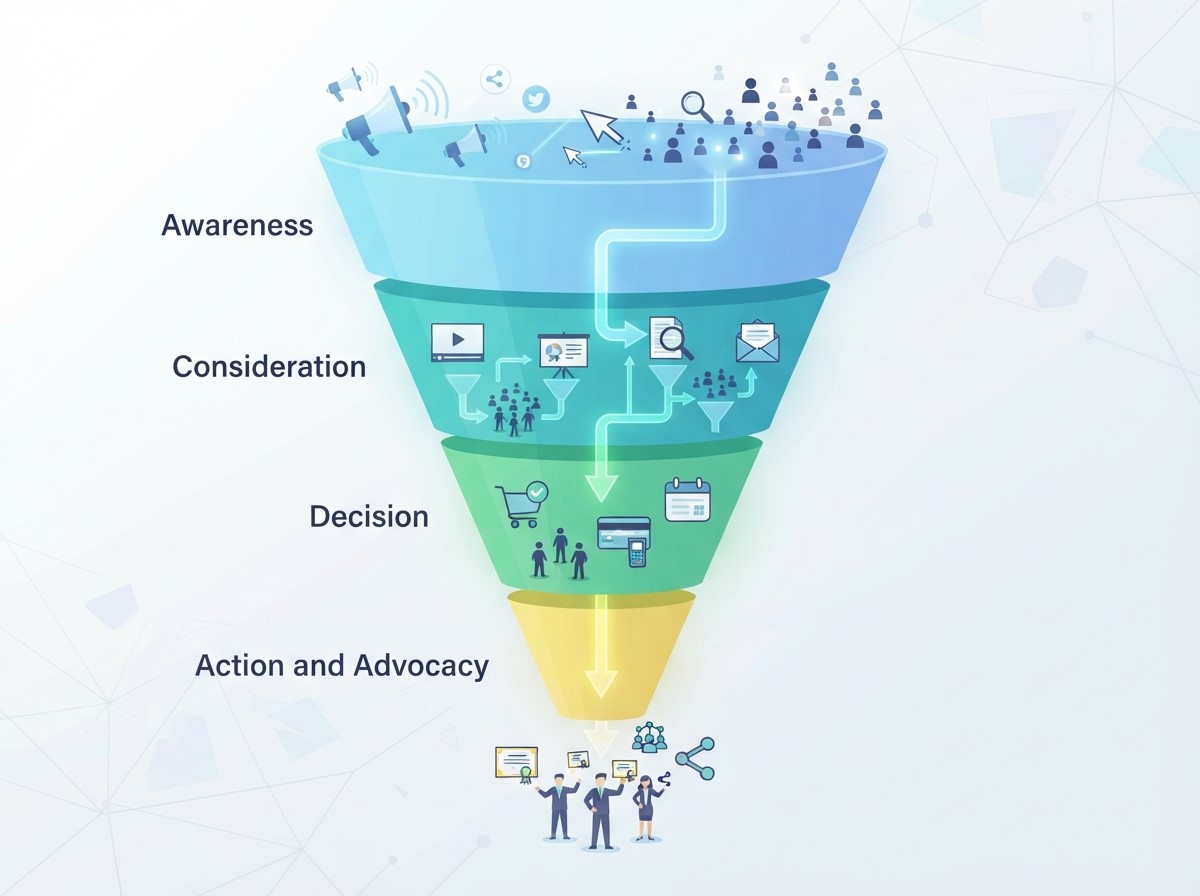 A Course Sales Funnel creates a structured path that moves potential learners from discovering a course to becoming paying customers. Instead of asking visitors to purchase immediately, the funnel provides information, builds trust, addresses concerns, and gradually encourages a buying decision.
Attract Potential Learners
The first stage focuses on generating awareness. Course creators can use search engine optimization, blog content, social media posts, videos, webinars, podcasts, and educational resources to reach potential students.
Free educational content is particularly useful because it demonstrates expertise before asking the audience to make a purchase. When people consistently receive useful information, they may become more interested in learning from the same creator through a paid course.
Capture and Nurture Leads
Once potential learners discover the course, the next step is encouraging them to enter a communication channel. Email subscriptions, free resources, webinars, quizzes, and downloadable guides can help capture leads.
Lead nurturing can then provide additional educational content, course information, testimonials, case studies, and answers to common objections. This process helps prospects understand the course before making a purchasing decision.
Optimize the Conversion Stage
The final stage of the funnel focuses on converting interested prospects into customers. A strong sales page should clearly explain the course benefits, curriculum, instructor credibility, learning format, pricing, bonuses, and frequently asked questions.
A simple checkout experience is also important. Unnecessary steps, confusing forms, or unexpected costs can create friction and reduce completed purchases.
Developing a Strategic Course Launch Strategy
A successful Course Launch Strategy creates awareness before the course becomes available and maintains momentum after the launch. Planning should begin well before the official release date so that potential learners have enough time to understand the course and recognize its value.
Build Interest Before Launch
Pre-launch content can introduce the problem that the course solves without immediately focusing on the sale. Educational videos, social posts, articles, live sessions, and email content can gradually create awareness.
A waitlist can also help identify people who are already interested. This provides a valuable audience for launch announcements, early access opportunities, and special offers.
Use Launch Content to Build Trust
Trust is an important factor in online education purchases. Potential learners may want to know about the instructor’s experience, teaching approach, course quality, and expected outcomes.
Behind-the-scenes content, sample lessons, student experiences, demonstrations, and educational webinars can provide evidence of course value. Consistent communication can make the launch feel more informative rather than purely promotional.
Create a Post-Launch Strategy
Course sales should not stop when the launch period ends. After the initial campaign, creators can continue promoting the course through evergreen content, search traffic, email campaigns, partnerships, and social media. A post-launch strategy can turn the course into a long-term digital product rather than a one-time revenue opportunity.
Strengthening Online Course Promotion
Consistent Online Course Promotion helps courses remain visible to potential learners throughout the year. Different channels can support different stages of the buyer journey, allowing creators to build awareness, engagement, and conversions over time.
Use Content Marketing
Educational content can attract people who are searching for solutions related to the course topic. Blog posts, tutorials, guides, videos, and social media content can answer common questions while introducing the course as a deeper learning solution.
For example, a course about digital marketing could be supported by content covering SEO, content marketing, social media strategy, analytics, and campaign optimization.
Leverage Social Media
Social media platforms provide opportunities to communicate directly with potential learners. Short educational videos, carousel posts, live sessions, polls, discussions, and student stories can increase engagement.
Rather than posting sales messages repeatedly, creators can balance promotional content with useful educational information. This approach can help maintain audience interest while supporting long-term brand visibility.
Use Email Marketing
Email marketing provides a direct communication channel with interested learners. Regular newsletters can deliver useful educational content while introducing relevant courses and learning opportunities.
Automated email sequences can also support different stages of the customer journey. New subscribers might receive introductory content, while highly engaged subscribers can receive course details, testimonials, enrollment reminders, or special offers.
Improving Course Landing Pages
A course landing page acts as one of the most important conversion points in the sales process. It should provide enough information for potential learners to understand the course, evaluate its value, and make an informed purchasing decision.
Focus on Benefits and Outcomes
Course pages should explain what learners can achieve rather than focusing exclusively on features. A list of modules is useful, but practical outcomes make the offer easier to understand.
Instead of only explaining what lessons are included, course creators can describe the skills, knowledge, projects, or capabilities learners can develop.
Add Social Proof
Testimonials, reviews, learner results, ratings, and case studies can provide evidence of course quality. Authentic social proof may help reduce uncertainty for people who are considering enrollment. Where possible, testimonials should explain the learner’s starting point, experience with the course, and results achieved.
Make the Purchase Process Simple
A clear call to action should guide visitors toward enrollment. Pricing information, payment options, refund policies, and course access details should be easy to find. A straightforward checkout process can reduce unnecessary friction and make it easier for interested learners to complete their purchase.
Using Pricing and Offers Strategically
Pricing influences how potential learners perceive the value of an online course. A course should be priced according to its content quality, audience, positioning, transformation, support level, and competitive environment rather than relying only on low prices to generate sales.
Offer Flexible Learning Options
Different learners may have different budgets and expectations. Course creators can consider multiple packages that provide varying levels of access, support, resources, or additional materials.
For example, a standard course could provide core lessons, while a premium option might include live sessions, personalized feedback, or additional resources.
Use Limited Promotions Carefully
Discounts and special offers can create urgency, but excessive discounting may weaken perceived value. Promotional pricing works best when it supports a clear campaign objective.
Early-bird offers, seasonal promotions, enrollment bonuses, and limited-time bundles can provide additional reasons for interested learners to act.
Increasing Trust and Student Engagement
 Long-term course sales depend not only on attracting new customers but also on creating positive learning experiences. Satisfied students may return for additional courses, recommend the program to others, and contribute valuable testimonials.
Provide a Strong Learning Experience
High-quality lessons, practical examples, downloadable resources, clear instructions, and organized course navigation can improve the learning experience.
Student support is also important. Timely responses to questions, discussion opportunities, progress tracking, and additional guidance can make learners feel more supported throughout the course.
Encourage Student Communities
A learning community can increase interaction and create additional value beyond course lessons. Private groups, discussion forums, live sessions, and peer activities can help students connect with one another. Community participation can also improve engagement and provide course creators with direct feedback about learner needs.
Measuring and Improving Course Sales Performance
Data analysis helps course creators understand which marketing activities generate results. Instead of relying on assumptions, businesses can monitor important performance indicators and use the findings to improve their sales process.
Track Key Metrics
Useful metrics may include website traffic, lead conversion rate, email engagement, landing page conversion rate, customer acquisition cost, refund rate, and course completion rate. These measurements can reveal where potential learners are leaving the customer journey and which channels are contributing to sales.
Test Different Marketing Elements
A/B testing can be used to compare different headlines, calls to action, pricing presentations, landing page layouts, email subject lines, or promotional messages. Small improvements across several stages of the customer journey can contribute to stronger overall performance over time.
Creating a Sustainable Long-Term Sales System
Long-term growth requires a system that continues working beyond individual promotional campaigns. Course creators should combine evergreen content, automated marketing, consistent promotion, audience relationships, and continuous course improvements.
A reliable sales system can generate traffic through search engines, attract leads through valuable resources, nurture prospects through email, and convert interested learners through optimized course pages. At the same time, existing students can become an important source of repeat purchases, referrals, reviews, and community growth. This creates a cycle where valuable education supports customer relationships, and those relationships support future Online Course Sales.
Future Trends in Online Course Sales
 The online education industry continues to evolve as learners expect more personalized, accessible, and interactive experiences. Course creators are increasingly using automation, artificial intelligence, community-based learning, short-form educational content, and personalized communication.
Mobile-friendly learning is also becoming increasingly important because many learners consume educational content through smartphones and tablets. Courses that provide flexible access and engaging learning formats can better accommodate modern learning habits. Future growth will likely depend on combining technology with strong educational value. Automation can improve efficiency, but meaningful content, credible instruction, and learner outcomes remain central to building sustainable course businesses.
Conclusion
Successful Online Course Sales require more than creating a course and placing it on a website. Sustainable growth comes from understanding the target audience, communicating a clear value proposition, building an effective Course Sales Funnel, and developing a strategic Course Launch Strategy.
Consistent Online Course Promotion, optimized landing pages, thoughtful pricing, student engagement, and performance measurement can strengthen the entire customer journey. By continuously improving both marketing and learning experiences, course creators can build stronger relationships with learners and develop a more sustainable revenue model.
Frequently Asked Questions
1. What are Online Course Sales?
Online Course Sales refer to the process of marketing and selling digital educational programs to learners through websites, learning platforms, email campaigns, social media, and other digital channels.
2. How can I increase Online Course Sales?
You can increase sales by improving your course value proposition, targeting the right audience, creating useful content, building a Course Sales Funnel, optimizing landing pages, using email marketing, and maintaining consistent Online Course Promotion.
3. What is a Course Sales Funnel?
A Course Sales Funnel is a structured customer journey that moves potential learners from awareness and interest toward enrollment. It commonly includes content marketing, lead generation, nurturing, sales pages, and checkout.
4. Why is a Course Launch Strategy important?
A Course Launch Strategy helps generate awareness and interest before a course becomes available. It can organize pre-launch content, waitlists, promotional campaigns, enrollment periods, and post-launch activities.
5. How does Online Course Promotion help sales?
Online Course Promotion increases visibility among potential learners. Content marketing, social media, email marketing, webinars, partnerships, and search optimization can help attract and nurture people who may eventually purchase the course.
6. Does social media increase course sales?
Social media can support course sales by increasing brand visibility, audience engagement, educational content distribution, and communication with potential learners. Its effectiveness depends on the audience, content quality, platform, and overall marketing strategy.
7. Should online courses offer discounts?
Discounts can support specific promotional goals, such as early enrollment or seasonal campaigns. However, frequent discounting may affect perceived value, so promotional pricing should be used strategically.
8. How important are testimonials for online course sales?
Testimonials can provide social proof and help potential learners understand other students’ experiences. Authentic testimonials that describe specific experiences or outcomes can be particularly useful for reducing purchase uncertainty.
9. What metrics should I track for course sales?
Important metrics can include website traffic, lead conversion rate, landing page conversion rate, email engagement, customer acquisition cost, refund rate, enrollment numbers, and course completion rate.
10. Can online courses generate long-term revenue?
Yes. Online courses can support long-term revenue when creators maintain consistent promotion, improve course quality, build learner relationships, encourage repeat purchases, and develop evergreen marketing systems that continue attracting potential students.