The Impact of Obstacle Courses on Physical Development
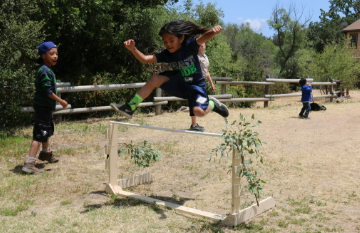
The humble obstacle course, whether found in military training facilities, children’s playgrounds, or adult fitness centers, represents one of the most comprehensive physical development tools available. Unlike isolated exercise movements or single-sport activities, obstacle courses create integrated challenges that develop multiple physical capacities simultaneously. This multifaceted approach to movement training explains why obstacle courses remain consistently effective across various populations and settings.
The Multidimensional Physical Benefits
Obstacle courses naturally promote whole-body strength development through varied resistance challenges. Unlike isolated weight training that targets specific muscle groups, obstacle courses require functional strength that mimics real-world movement demands. Climbing elements develop upper body and core strength, while jumping and balancing components build lower body power and stabilization. This integrated approach creates balanced muscular development less prone to imbalances that often occur with more specialized training methods.
Cardiovascular conditioning represents another significant benefit, particularly in courses designed with limited rest between elements. The intermittent high-intensity effort followed by brief recovery periods creates natural interval training that improves cardiac efficiency and oxygen utilization. This cardiovascular adaptation carries over remarkably well to everyday activities and other physical pursuits, improving overall stamina and resistance to fatigue.
Perhaps most significantly, obstacle courses develop movement competence through constantly varied challenges. Each obstacle requires unique movement solutions, forcing participants to adapt their body positioning and force application based on ever-changing circumstances. This adaptive capacity creates physical resilience that transfers to diverse movement scenarios encountered in daily life and recreational activities.
Developmental Benefits for Children
For children, obstacle courses offer particularly profound developmental benefits during critical growth periods. The varied movement challenges directly support the development of fundamental movement patterns that serve as building blocks for all future physical activities. Research published in the Journal of Physical Education and Sport indicates that children who regularly engage with varied movement obstacles demonstrate significantly more developed motor skills than peers who participate primarily in repetitive activities.
Proprioception—the body’s ability to sense its position in space—develops dramatically through obstacle course participation. As children navigate varying heights, unstable surfaces, and changing directional demands, their nervous system creates increasingly refined maps of their body’s capabilities and spatial relationships. This enhanced body awareness reduces injury risk while improving performance across all physical activities.
Physical confidence emerges naturally through progressive obstacle challenges. When children successfully navigate increasingly difficult obstacles, they develop not just physical capability but also belief in their ability to overcome physical challenges. This confidence often transfers beyond physical domains, influencing how children approach academic and social challenges as well.
The sequential nature of obstacle courses also supports cognitive development alongside physical capabilities. Children must plan movement sequences, remember obstacle patterns, and make split-second decisions about how to approach each challenge. This integration of cognitive and physical demands mirrors the complexities of real-world movement environments far better than isolated physical activities.
Adult Physical Development Through Obstacle Training
For adults, obstacle courses often reawaken dormant movement capabilities diminished through sedentary lifestyles and specialized activities. The varied challenges force adults to rediscover movement patterns that may have been neglected for years, creating more comprehensive physical competence. Many participants report feeling “physically younger” after several weeks of regular obstacle training, likely due to the restoration of movement variability typically associated with youthful movement quality.
The unpredictable nature of obstacle courses creates valuable neurological adaptation absent in more predictable exercise formats. Each obstacle presents unique challenges requiring real-time problem-solving and movement adaptation. This constant novelty stimulates neuroplasticity—the brain’s ability to form new neural connections—which research increasingly links to maintained cognitive function and reduced age-related physical decline.
Balance and coordination improvements occur rapidly with regular obstacle course training. As noted in our previous article on functional fitness development, these qualities tend to decline with age unless specifically challenged. Obstacle courses provide precisely the varied stability challenges needed to maintain these capabilities, potentially reducing fall risk and supporting independent function throughout aging.
Obstacle courses also create natural progression pathways that support continuous physical development. As participants master basic obstacles, more challenging variations naturally maintain the optimal difficulty level for continued adaptation. This built-in progression system eliminates the plateau effect common in many exercise programs, ensuring ongoing physical development regardless of starting capacity.
Psychological Development Through Physical Challenges
Beyond purely physical benefits, obstacle courses create valuable psychological adaptations through their inherent challenge structure. Participants develop perseverance when facing obstacles that initially appear insurmountable. The clear visual feedback of progress—successfully completing a previously impossible obstacle—reinforces the connection between sustained effort and achievement.
Risk assessment capabilities improve through repeated exposure to varied obstacles. Participants learn to quickly evaluate their capabilities relative to challenges, making appropriate decisions about approach and execution. This calibration between perceived and actual capacity represents a valuable life skill extending well beyond physical domains.
Community engagement often emerges spontaneously in obstacle course environments. The shared challenge creates natural opportunities for encouragement, instruction, and celebration among participants. According to research from the American College of Sports Medicine, activities combining physical challenge with social connection demonstrate significantly higher adherence rates than isolated exercise pursuits.
Creating Effective Developmental Obstacle Environments
The developmental impact of obstacle courses depends significantly on their design principles. Effective courses incorporate progressive challenge levels allowing participation regardless of current physical capacity. This scalability ensures participants consistently work at their developmental edge—challenging enough to stimulate adaptation but achievable enough to build confidence.
Movement variety represents another crucial design element. Courses requiring crawling, climbing, balancing, jumping, swinging, and carrying create more comprehensive development than those emphasizing limited movement patterns. This diversity ensures balanced physical development while maintaining participant engagement through constantly varied challenges.
Safety considerations must balance with developmental challenge. While appropriate risk taking promotes development, excessive danger creates counterproductive fear responses. Physical development occurs most effectively when participants feel challenged but not threatened, allowing full engagement with obstacles without protective movement restrictions.
Obstacle Course Implementation Across Settings
Educational environments increasingly incorporate obstacle courses as physical education evolves beyond traditional sports-based approaches. Progressive schools recognize that obstacle training develops fundamental movement competencies supporting lifelong physical activity. These educational applications typically emphasize age-appropriate challenges focusing on fundamental movement patterns rather than extreme physical demands.
Community recreation centers and parks have similarly embraced obstacle course installations to promote physical development across demographic groups. These public facilities often feature adaptable designs accommodating various physical capabilities, ensuring developmental benefits reach diverse populations. The accessibility of these installations provides valuable physical development opportunities for communities with limited fitness resources.
The explosion of commercial obstacle course racing has introduced millions of adults to this developmental training approach. What began as specialized military training has evolved into mainstream fitness experiences attracting participants across age groups and fitness levels. This commercialization has dramatically expanded obstacle course participation, bringing developmental benefits to previously untapped populations.
Family-oriented obstacle facilities represent a particularly valuable trend, creating environments where parents and children can simultaneously engage in developmentally appropriate challenges. These multigenerational settings allow physical development across age groups while fostering family bonds through shared physical experiences.
Conclusion
Obstacle courses represent remarkably complete physical development tools precisely because they mirror the integrated challenges encountered in natural human movement. Rather than isolating physical capacities, they demand simultaneous strength, endurance, coordination, balance, and problem-solving—the same integration required in life’s physical challenges.
For children, obstacle courses provide critical developmental stimulation during formative years, building fundamental movement competencies that support lifelong physical activity. For adults, these varied challenges restore movement capabilities often diminished through specialized or sedentary lifestyles, creating renewed physical capacity and confidence.
The continued evolution of obstacle course designs and implementations promises to expand their developmental impact even further. As research continues illuminating the connections between varied movement challenges and physical development, obstacle courses will likely assume an increasingly central role in physical development programming across settings and populations.
When thoughtfully designed and progressively implemented, obstacle courses create ideal environments for ongoing physical development—challenging enough to stimulate adaptation, varied enough to develop comprehensive capabilities, and engaging enough to sustain participation where more conventional approaches often fail.
What physical development benefits have you observed through obstacle course training? Share your experiences in the comments below.