In today’s competitive e-learning landscape, simply delivering content is not enough. Learners crave interactivity, motivation, and fun. Gamification – the application of game-like elements such as points, badges, and leaderboards – has emerged as a powerful way to transform ordinary courses into engaging learning experiences. In this comprehensive guide, we’ll explore how to effectively integrate gamification into your online courses to boost student engagement, retention, and overall satisfaction.
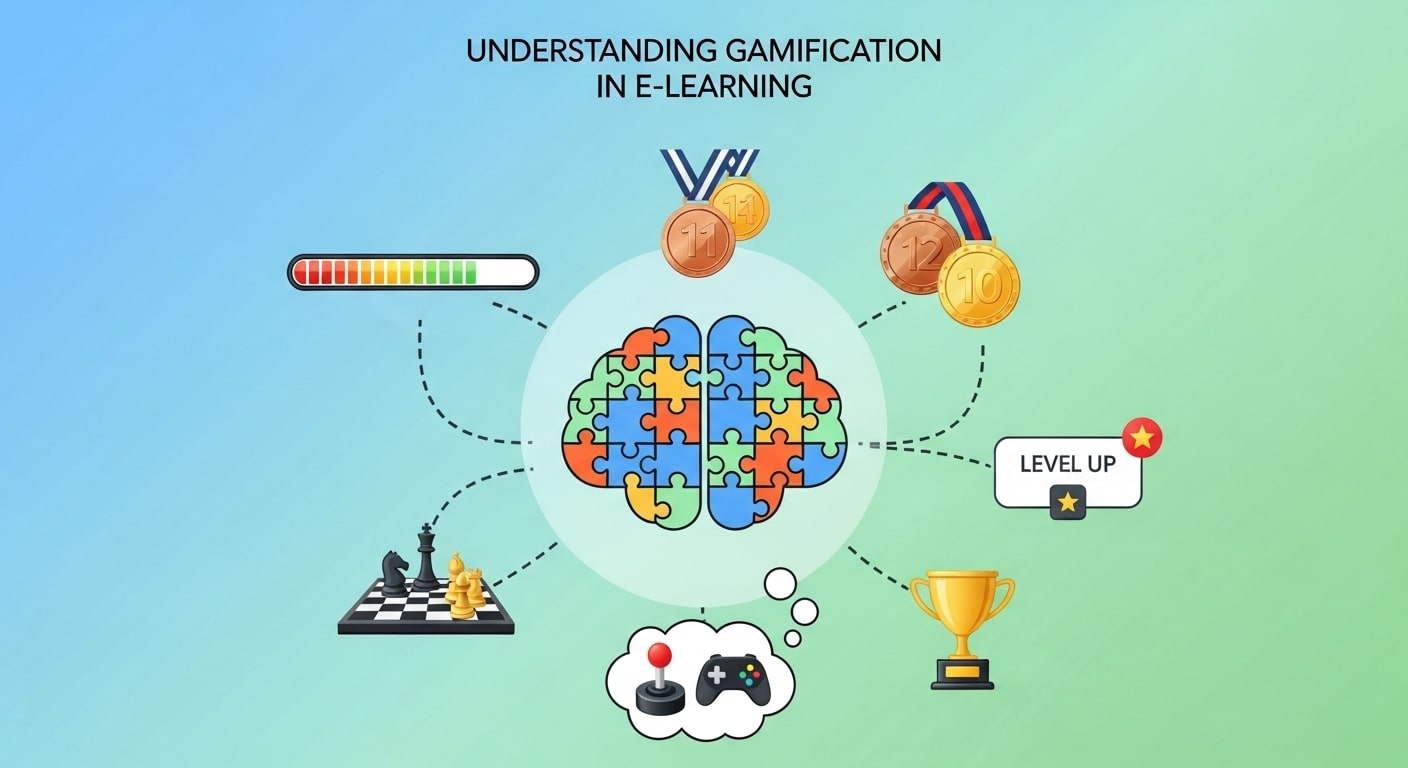
Understanding Gamification in E-Learning
Gamification involves incorporating game principles into non-game contexts. In the realm of online learning, this means using mechanics like point scoring, competition, and rewards to motivate learners. Rather than passively consuming information, students participate in challenges, earn achievements, and receive instant feedback. This interactive approach taps into intrinsic and extrinsic motivators, making the learning journey more dynamic.
Key Benefits of Gamifying Your Course
Introducing gamification can lead to:
Increased Engagement: Game elements keep learners motivated and invested in the material.
Improved Retention: Repetition, rewards, and feedback reinforce memory and understanding.
Higher Completion Rates: Leaderboards and badges incentivize learners to finish modules.
Enhanced Learning Outcomes: Interactive challenges promote critical thinking and problem-solving.
Essential Gamification Elements
When adding gamification to your course, consider these core components:
Points and Scoring: Reward learners for completing tasks and assessments.
Badges and Achievements: Provide visual tokens of progress and mastery.
Leaderboards: Foster healthy competition by displaying top performers.
Levels and Progress Bars: Show learners how far they’ve come and what’s next.
Challenges and Quests: Create story-driven modules that guide learners through objectives.
Instant Feedback: Offer immediate responses to reinforce learning and correct mistakes.
Designing Your Gamified Online Course
Follow these steps to build a course that leverages gamification effectively:
Define Clear Objectives: Align game mechanics with learning outcomes.
Know Your Audience: Choose elements that resonate with your learners’ preferences.
Balance Challenge and Skill: Ensure tasks are neither too easy nor too difficult.
Integrate Storytelling: Craft a compelling narrative that weaves through the course.
Provide Meaningful Rewards: Use badges, certificates, or real-world incentives.
Test and Iterate: Gather feedback and refine mechanics to maximize impact.
Top Tools and Platforms for Gamification
Several e-learning platforms and plugins support gamification out of the box:
LearnDash: WordPress plugin with built-in leaderboards and badges.
TalentLMS: Offers points, badges, and leaderboard features.
Moodle: Open-source LMS with gamification plugins like Level Up! and Stash.
Kajabi: Includes engagement tools and community features.
Articulate Storyline: Authoring tool for custom gamified interactions.
Case Study: Gamification in Action
Consider TechMaster Academy, which introduced a points system, badges, and a leaderboard for their coding courses. Within three months, course completion rates soared by 40%, and student satisfaction scores increased by 25%. Learners reported higher motivation and cited the social competition as a key driver of continued participation.
Gamification vs Game-Based Learning
Although often used interchangeably, gamification and game-based learning are not the same. Gamification involves adding game elements—such as points, badges, or leaderboards—to traditional learning content. Game-based learning, on the other hand, uses full games as the primary method of instruction. Gamification enhances existing courses without replacing instructional material, making it easier to implement. It focuses on motivation and engagement rather than gameplay itself. Understanding this distinction helps educators choose the right approach based on learning goals, budget, and development time. In most online courses, gamification is more practical and scalable than full game-based learning solutions.
Personalization in Gamified Learning
Personalization plays a crucial role in effective gamification. Learners differ in motivation, skill level, and learning pace, so a one-size-fits-all approach may not work. Adaptive gamification allows learners to choose paths, difficulty levels, or rewards that match their preferences. Personalized dashboards, progress tracking, and tailored challenges improve learner satisfaction and outcomes. When learners feel the experience is designed specifically for them, their commitment increases. Personalization also reduces frustration by ensuring challenges remain achievable. By combining gamification with adaptive learning technologies, educators can deliver more inclusive and learner-centered online education experiences.
Psychological Foundations of Gamification
Gamification is deeply rooted in psychology, particularly motivation theory and behavioral science. Concepts such as rewards, achievement, progress, and competition trigger dopamine release, which reinforces positive learning behavior. Self-Determination Theory explains how autonomy, competence, and relatedness influence motivation—elements that gamification naturally supports. When learners feel a sense of control, see measurable progress, and connect with others, they are more likely to stay engaged. Gamification also leverages goal-setting theory by breaking large learning objectives into smaller, achievable milestones. Understanding these psychological foundations helps course designers create meaningful gamified experiences that motivate learners intrinsically rather than relying solely on external rewards.
Best Practices for Sustainable Gamification
To ensure your gamification efforts deliver long-term results, keep these best practices in mind:
Align Mechanics with Learning Goals: Avoid gamification for its own sake.
Encourage Collaboration: Include team challenges and peer-to-peer interactions.
Monitor Progress: Use analytics to track engagement and identify drop-off points.
Refresh Content Regularly: Introduce new challenges, badges, and levels to prevent staleness.
Foster Community: Create forums or social groups for learners to share achievements.
Measuring Success and Analyzing Results
Track key metrics such as engagement rate, completion rate, quiz scores, and time on task. Use surveys and feedback forms to gauge learner satisfaction. Analyze the data to determine which game elements are most effective and where adjustments are needed.
Gamification for Corporate and Professional Training
Engagement-focused learning approaches work particularly well in corporate and professional training settings. Many employees struggle to stay motivated during mandatory programs, but well-designed interactive elements can turn these sessions into compelling experiences. Tools such as progress points, certifications, and ranking systems foster healthy competition while encouraging continuous skill development. These methods also align well with bite-sized learning, enabling professionals to build knowledge in short, focused intervals. Meaningful rewards—including recognition, career advancement, and performance incentives—further strengthen motivation. By analyzing progress and performance data, organizations can uncover skill gaps and identify high performers. Ultimately, these strategies enhance knowledge retention, boost productivity, and increase employee satisfaction across workplace learning initiatives.
Common Challenges in Implementing Gamification
While interactive reward-based approaches offer many advantages, they also present certain challenges. Poor design can shift attention from learning to rewards, resulting in shallow participation. Too much competition may demotivate slower learners, and overly complex systems can confuse or overwhelm users. Platform limitations may further restrict flexibility and customization. To address these issues, educators should prioritize learning objectives, balance competition with collaboration, and design mechanics that are simple and intuitive. Ongoing testing and regular learner feedback play a crucial role in refinement. When these challenges are handled thoughtfully, engagement strategies enhance learning rather than distract from it.
Accessibility and Inclusive Gamification Design
Inclusive, engagement-driven design ensures that every learner—regardless of ability, background, or learning style—can participate meaningfully. Courses should follow accessibility best practices, such as screen reader support, keyboard-friendly navigation, and clear visual contrast. Interactive elements should never depend only on speed, audio cues, or complex visuals. Offering multiple paths to earn recognition and progress helps accommodate different learning preferences. Thoughtful design also accounts for cultural awareness and simple, clear language. When learning environments are accessible, they create equal opportunities and lead to stronger outcomes for a wider audience. Accessibility is not optional—it is a core element of effective, learner-centered course design.
Gamification and Microlearning Integration
Gamification works exceptionally well when combined with microlearning strategies. Microlearning delivers content in small, focused units, making it ideal for short challenges, quick quizzes, and instant rewards. Gamified microlearning encourages frequent engagement without overwhelming learners. Progress bars, streaks, and daily challenges help learners maintain consistency over time. This approach is particularly effective for mobile learning and busy professionals. By integrating gamification with microlearning, educators can create flexible learning experiences that fit naturally into learners’ daily routines while reinforcing knowledge through repetition and practice.
Data-Driven Gamification Strategies
Effective gamification relies heavily on data analysis. Learning analytics provide insights into learner behavior, engagement patterns, and performance trends. By analyzing this data, educators can refine reward systems, adjust difficulty levels, and personalize challenges. Data-driven gamification helps identify which mechanics motivate learners most and where drop-offs occur. Predictive analytics can even anticipate disengagement before it happens. Using data responsibly ensures that gamification remains effective and learner-focused. Continuous improvement based on real learner data transforms gamification from a static feature into a dynamic, evolving strategy.
Role of Social Interaction in Gamified Learning
Social interaction significantly enhances the impact of gamification. Features such as team-based challenges, peer feedback, discussion boards, and social recognition foster a sense of community. Collaborative gamification reduces isolation in online learning and encourages knowledge sharing. Social rewards—such as public recognition or peer endorsements—often have greater motivational power than virtual points alone. When learners feel connected to others, their commitment and accountability increase. Designing gamification with social interaction in mind transforms individual learning into a shared experience, strengthening both engagement and learning outcomes.
Gamification for Skill Assessment and Competency Mapping
Gamification can be a powerful tool for assessing skills and competencies. Scenario-based challenges, simulations, and level progression allow learners to demonstrate real-world skills rather than memorizing information. Competency maps aligned with game levels help visualize skill development over time. Badges and certificates can represent verified competencies, making learning outcomes more transparent. This approach benefits both learners and organizations by providing clear evidence of skill mastery. Gamified assessment shifts the focus from exams to practical application, supporting more meaningful and job-relevant learning experiences.
Gamification as a Branding and Differentiation Strategy
Beyond boosting participation and learning results, interactive reward-based strategies can also function as a strong branding and differentiation tool in the e-learning space. A thoughtfully designed experience leaves a lasting impression, helping a platform stand out from competitors. Custom badges, themed challenges, and branded reward systems strengthen visual identity while building learner loyalty. These elements naturally encourage social sharing, as participants enjoy showcasing milestones and progress online. When learners connect enjoyment and achievement with a platform, trust deepens and long-term relationships form. When designed strategically, these engagement techniques not only educate but also enhance brand perception, allowing digital learning providers to stand out in an increasingly crowded market.
Future Trends in Gamified E-Learning
The future of gamified e-learning is shaped by emerging technologies. Artificial intelligence enables adaptive gamification that responds to learner behavior in real time. Virtual reality (VR) and augmented reality (AR) are creating immersive, game-like learning environments. Blockchain-based credentials and digital badges are gaining credibility for skill verification. Social gamification, where learners collaborate and compete globally, is also expanding. As data analytics become more advanced, gamification strategies will become increasingly personalized and outcome-driven. These trends suggest that gamification will continue to evolve as a core component of innovative and effective online education.
Interactive learning strategies can transform digital courses into engaging, motivation-driven experiences. By thoughtfully using elements like points, badges, progress tracking, leaderboards, and story-based challenges, educators can boost participation and knowledge retention. These techniques encourage learners to stay consistent, enjoy the process, and achieve better results. When applied correctly, they create a more immersive journey that stands out in today’s competitive e-learning space. Adopting these methods now can significantly improve learner satisfaction and help your course grow and succeed.
Frequently Asked Questions (FAQs)
1. What does game-based learning mean in digital education?
It refers to the use of interactive, game-inspired elements—such as points, achievements, progress tracking, and challenges—within online courses to increase motivation, participation, and engagement.
2. How do interactive elements increase learner involvement?
They make lessons more dynamic and rewarding. Features like instant feedback, visible progress, and friendly competition encourage learners to stay active and committed throughout the course.
3. Can these techniques be used for all types of online courses?
Yes. They work well across technical subjects, academic programs, corporate training, and soft-skill development, as long as the design aligns with learning goals and audience needs.
4. Which interactive features are most effective?
Popular options include scoring systems, achievement badges, progress indicators, levels, rankings, skill-based challenges, and narrative-driven learning paths.
5. Can interactive learning systems reduce educational value?
When poorly designed, they may shift focus away from learning. To prevent this, interactive mechanics should reinforce educational objectives rather than distract from them.
6. Do learners need gaming experience to participate?
No prior gaming experience is required. Well-designed systems are intuitive and accessible, making them easy for all learners to use and benefit from.
7. Which platforms support interactive learning features?
Many learning platforms offer built-in support, including LearnDash, TalentLMS, Moodle with plugins, Kajabi, and Articulate Storyline, allowing flexible implementation.
8. How can effectiveness be measured?
Results can be evaluated through engagement levels, completion rates, assessment performance, time spent on lessons, and feedback from learners.
9. Is implementing interactive learning costly?
In most cases, no. Many platforms include these features by default, and simple mechanics like points and achievements require minimal investment.
10. How often should interactive features be refreshed?
Updating them periodically with new challenges, rewards, or themed activities helps maintain interest and keeps learners motivated over time.