Gamification Mastery: 7 Proven Strategies to Skyrocket Engagement in Your Online Courses
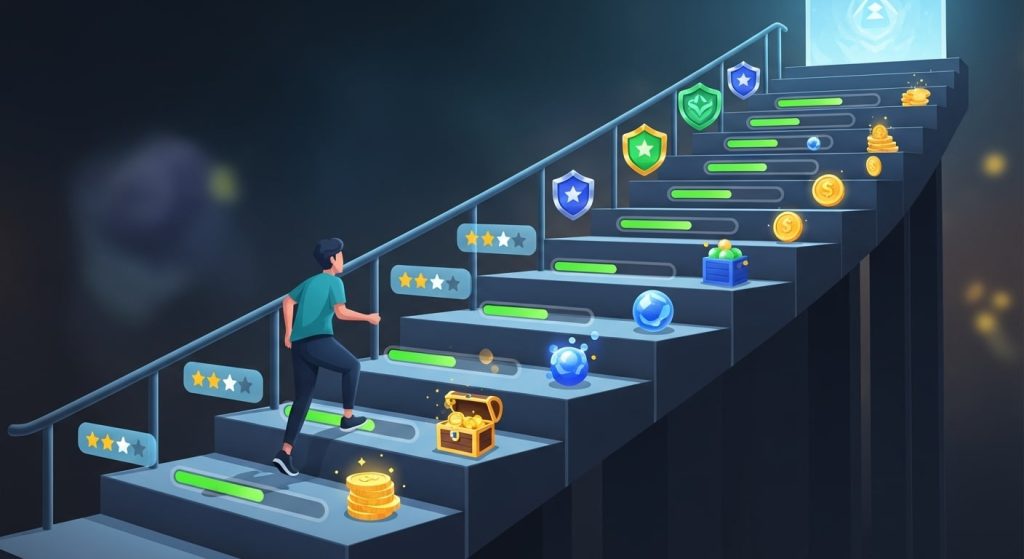
Why Gamification Works
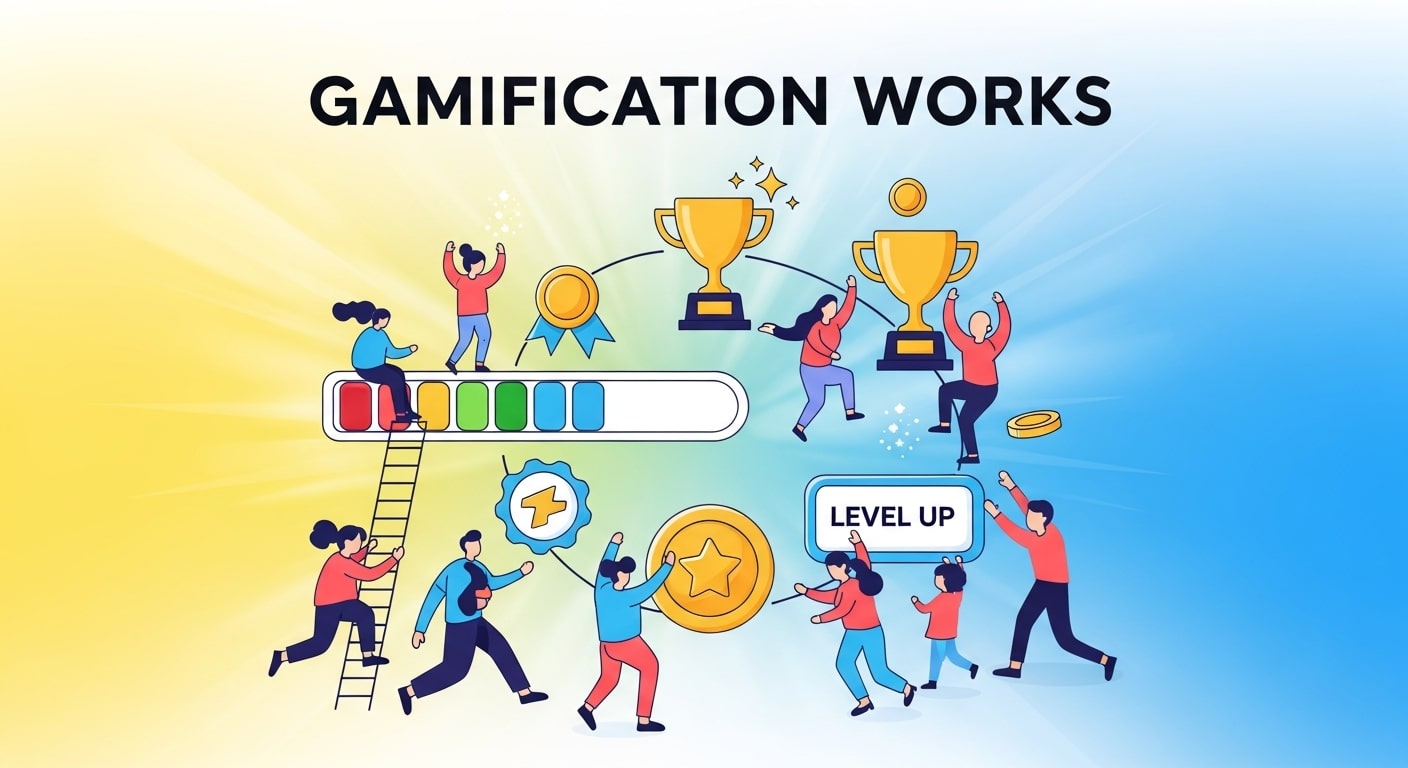
At its core, gamification taps into intrinsic and extrinsic motivators. Intrinsic motivators—like mastery, autonomy, and purpose—are fueled by a learner’s internal drive to improve and contribute. Extrinsic motivators—such as points, badges, and leaderboards—provide tangible recognition for achievement. When blended effectively, these motivators create a balanced learning environment that encourages sustained effort and reduces drop-off rates.
The Psychology Behind Gamification
Understanding basic principles of human psychology can help you design more effective gamified experiences. Here are three key concepts:
- Self-Determination Theory (SDT): Proposes that competence, autonomy, and relatedness are fundamental to intrinsic motivation. Gamification can bolster all three by providing clear goals (competence), allowing choice paths (autonomy), and fostering social interaction (relatedness).
- Operant Conditioning: B.F. Skinner’s behaviorist approach highlights the power of rewards and reinforcements. Frequent, predictable rewards (points, badges) reinforce desired learning behaviors and increase the likelihood of repetition.
- Flow Theory: Mihaly Csikszentmihalyi identified flow as the optimal state of immersion. Properly designed challenges—balanced between difficulty and skill—can keep learners in flow, boosting focus and satisfaction.
7 Proven Gamification Strategies
1. Points and Scoring Systems
Implementing a points system is the simplest way to introduce gamification. Assign points for completing lessons, quizzes, discussion posts, or peer reviews. A visible point tally drives learners to log in regularly and tackle more assignments. Ensure that the rules for earning points are transparent to avoid confusion or frustration.
2. Badges and Achievements
Badges serve as digital trophies that learners can showcase when they master a skill or reach a milestone. Design badges around core learning objectives—such as “Critical Thinker,” “Speed Reader,” or “Collaboration Champion.” Display badges on user profiles or in a public gallery to boost recognition and social proof.
3. Leaderboards for Friendly Competition
Leaderboards leverage social proof and competition to drive motivation. By ranking learners based on points, quiz performance, or challenge completion times, you tap into the natural human desire to compare and excel. To maintain engagement across skill levels, consider separate leaderboards for beginners, intermediates, and advanced users.
4. Progress Bars and Milestones
Visual progress indicators offer immediate feedback on how far a learner has come and how much remains. Progress bars, checklists, or completion percentages reduce uncertainty and encourage users to persist until 100%. Break content into small, consumable modules so learners can achieve mini-milestones frequently.
5. Quests, Challenges, and Missions
Frame assignments as quests or missions to give them narrative context. For example, rather than a generic module on marketing, structure it as “Mission: Launch a Campaign.” Provide a storyline, objectives, and a time frame. This narrative layering adds excitement and purpose, making tasks feel like adventures rather than chores.
6. Levels and Unlockable Content
Levels signify advancement and unlock new content or features. After a learner completes “Level 1,” they might unlock bonus materials, advanced quizzes, or peer review privileges. This tiered access encourages learners to progress steadily and rewards their commitment with fresh, exclusive content.
7. Social and Collaborative Elements
Incorporate social features like discussion forums, peer-to-peer challenges, and team quests. Award group badges when teams meet collective goals. Collaboration fosters a sense of community and accountability, reducing isolation and dropout rates in self-paced courses.
Tools & Platforms to Implement Gamification
Several learning management systems (LMS) and plugins simplify gamification integration. Consider these popular options:
- Moodle with Game Activities Plugin: Offers badges, leaderboards, and points. Highly customizable but may require technical setup.
- Talent LMS: Built-in badges and points, plus out-of-the-box templates for gamified courses.
- Learn Dash for WordPress: Integrates with GamiPress or BadgeOS to add robust gamification features.
- Coursera & edX Micro-credentials: While not fully customizable, they offer recognized digital credentials and badges upon completion.
- Custom Development: For ultimate control, work with developers to build a tailored gamification layer on top of your platform.
Measuring Success: Metrics & Analytics
Data-driven insights are crucial for refining your gamification strategy. Track these key metrics:
- Engagement Rate: Percentage of active users completing gamified activities weekly or monthly.
- Completion Rate: Ratio of learners who finish modules or courses after gamification was introduced.
- Time on Task: Average time spent per module, which can indicate deeper immersion.
- Social Interactions: Forum posts, peer reviews, or team challenge submissions.
- Retention Rate: Percentage of learners who continue to the next course or module.
Best Practices & Common Pitfalls
While gamification can deliver powerful results, avoid these frequent missteps:
- Overemphasis on Extrinsic Rewards: Relying solely on points or badges can devalue intrinsic motivation. Balance with meaningful content and mastery goals.
- Complex Rules: If learners can’t easily understand how to earn rewards, gamification backfires. Keep systems transparent and intuitive.
- One-Size-Fits-All: Tailor challenges to different learner segments. Beginners and veterans need distinct pathways to stay motivated.
- Neglecting Feedback: Immediate feedback loops are the heart of gamified systems. Provide clear, actionable comments when learners make errors.
Ignoring Accessibility: Ensure color choices, fonts, and interactions comply with accessibility standards so all learners can participate fully.
Social and Collaborative Elements
Points and Scoring Systems

Points and scoring systems form the foundation of most gamified learning experiences. By awarding points for activities such as completing lessons, passing quizzes, submitting assignments, or participating in discussions, learners receive immediate recognition for their effort. This system creates a sense of progress and achievement, encouraging consistent participation. Points also act as short-term motivators, pushing learners to complete small tasks that collectively lead to course completion. To be effective, the point structure must be transparent and fair, with clearly defined rules for earning and losing points. When learners understand how their actions translate into rewards, they feel more in control of their learning journey and are more likely to stay engaged throughout the course.
Badges and Achievements
Badges and achievements act as visual symbols of success and mastery. They reward learners when they reach milestones, complete difficult modules, or demonstrate specific skills. Unlike points, badges carry emotional and social value because they represent accomplishment rather than quantity. Well-designed badges aligned with learning objectives—such as problem-solving, collaboration, or consistency—reinforce meaningful behaviors. Displaying badges on learner profiles or public dashboards increases motivation through recognition and social validation. Badges also encourage goal-oriented learning, as students strive to unlock specific achievements. When used strategically, they shift the focus from simply finishing tasks to mastering skills, making learning more purposeful and satisfying.
Leaderboards for Friendly Competition
Leaderboards introduce an element of healthy competition by ranking learners based on performance metrics such as points earned, quiz scores, or challenge completion. They tap into social motivation, pushing learners to improve their standing while observing peer progress. When designed thoughtfully, leaderboards can significantly boost engagement and participation. However, it’s important to avoid discouraging learners who fall behind. Segmenting leaderboards by skill level or using time-based resets ensures fairness and inclusivity. Personal or small-group leaderboards can also reduce pressure while maintaining motivation. Used correctly, leaderboards foster energy, accountability, and a competitive spirit without undermining collaboration or confidence.
Progress Bars and Milestones

Progress bars and milestones provide learners with clear visual feedback on their journey. Seeing how much content has been completed—and how much remains—reduces uncertainty and builds momentum. These indicators trigger a psychological desire to finish what has been started, increasing completion rates. Breaking courses into smaller modules with frequent milestones allows learners to experience regular success, which reinforces motivation. Progress tracking also helps learners manage time and set realistic goals. When learners feel they are moving forward, even in small steps, they are more likely to persist. Simple yet powerful, progress indicators make learning feel structured, achievable, and rewarding.
Quests, Challenges, and Missions
Quests and missions transform routine learning tasks into meaningful adventures. By framing assignments within a narrative—such as solving a problem, completing a mission, or achieving a goal—learners feel a stronger sense of purpose. This storytelling approach increases emotional engagement and reduces boredom. Challenges with clear objectives, deadlines, and rewards add excitement and urgency to the learning process. When learners feel like active participants rather than passive consumers, their motivation increases naturally. Quests also encourage problem-solving and critical thinking, as learners must apply knowledge to “complete” the mission. This approach makes learning immersive, memorable, and enjoyable.
Levels and Unlockable Content
Levels represent progression and growth within a course. As learners advance, they unlock new content, features, or privileges, reinforcing a sense of achievement. This structure mirrors video games, where progress is earned rather than given, increasing perceived value. Unlockable content—such as bonus lessons, advanced quizzes, or exclusive resources—keeps learners curious and motivated. Levels also help manage cognitive load by releasing content gradually instead of all at once. This prevents overwhelm and encourages steady learning habits. When learners see that effort leads to new opportunities, they remain committed. Levels transform learning into a journey of continuous advancement.
Social and collaborative elements
bring human connection into online learning environments. Features such as discussion forums, peer challenges, group missions, and team badges foster a sense of community. Collaboration reduces isolation, a common issue in self-paced courses, and increases accountability. Learners are more likely to stay engaged when they feel part of a group working toward shared goals. Social interaction also promotes deeper learning through discussion, feedback, and shared perspectives. Group rewards encourage cooperation rather than competition alone. When learners support and motivate each other, engagement becomes sustainable. Strong social design turns online courses into interactive learning ecosystems.
Read more about this topic: How to Use Interactive Quizzes to Increase Course Enrollment
Conclusion
Gamification isn’t just a trendy buzzword—it’s a research-backed methodology for boosting engagement, retention, and learning outcomes. By thoughtfully applying points, badges, leaderboards, progress indicators, quests, levels, and social elements, you can transform your online courses into immersive experiences that learners will return to again and again. Experiment with one or two strategies first, measure your results, and iterate. Over time, you’ll discover the perfect gamification formula for your unique audience and subject matter.
Ready to get started? Choose a gamification tool, outline your point and badge system, and pilot with a small group of learners. Gather feedback, refine your approach, and watch engagement soar. Your next cohort will thank you for making learning both effective and fun!
Frequently Asked Questions (FAQs)
1. What is gamification in online courses?
Gamification is the use of game design elements such as points, badges, levels, challenges, and leaderboards in online learning to increase learner engagement, motivation, and retention.
2. Is gamification effective for all types of courses?
Yes, gamification can be applied to most types of courses including business, technology, language learning, health, and soft skills. The key is to tailor the gamification strategy to the subject matter and learner level.
3. Does gamification rely only on rewards?
No. Effective gamification balances extrinsic rewards (points, badges, certificates) with intrinsic motivation such as mastery, autonomy, and purpose. Over-reliance on rewards alone can reduce long-term engagement.
4. Which gamification strategies work best for beginners?
For beginners, simple strategies like progress bars, points systems, and basic achievement badges work best. These provide quick wins and help build confidence early in the course.
5. Can leaderboards discourage low-performing learners?
If poorly designed, they can. To avoid this, use segmented leaderboards (beginner, intermediate, advanced) or personal progress-based rankings instead of a single global leaderboard.
6. Do I need technical skills to implement gamification?
Not necessarily. Many learning platforms such as Talent LMS, Moodle, and Learn Dash offer built-in or plugin-based gamification features. Custom development is only needed for advanced or highly tailored systems.
7. How can I measure the success of gamification?
You can track metrics such as engagement rate, course completion rate, time spent on tasks, social interactions, and learner retention to evaluate effectiveness.
8. Does gamification work in self-paced courses?
Yes. Features like milestones, unlockable content, social challenges, and achievement tracking help keep self-paced learners motivated and accountable.
9. What is the difference between gamification and game-based learning?
Gamification adds game elements to existing learning content, while game-based learning delivers the content through a full game experience. Both aim to improve engagement, but the design approach differs.
10. What is the best way to start using gamification?
Start small with points, badges, or progress indicators. Test these with a pilot group, gather feedback, and gradually expand to more advanced gamification elements.