Gamify Your Course Marketing: Boost Engagement & Enrollments

In today’s digital landscape, capturing attention has become a fierce competition. With endless scrolling and content overload, course creators must innovate to break through the noise and engage prospective learners. One powerful solution is to gamify your course marketing. By weaving game-inspired mechanics—such as points, progress bars, and challenges—into promotional strategies, you can turn static campaigns into immersive experiences that entice action and nurture loyalty.
Currently, organizations across industries leverage gamification to elevate engagement metrics, build community, and boost conversions. In educational technology, embedding playful elements not only increases click-through rates but also fosters deeper emotional connections with learners. This approach resonates especially well with audiences accustomed to interactive apps and social platforms, where rewards and status updates drive daily behaviors.
This year (2026), as competition for attention intensifies, refining how you gamify your course marketing will be essential to stand out. Rather than bombarding prospects with traditional ads or bland email blasts, a thoughtfully designed game journey can guide learners through each phase of the funnel—motivating sign-ups, encouraging referrals, and ultimately leading to course enrollments. In the sections that follow, you will uncover the fundamentals of gamification in marketing, explore its key benefits, learn best practices for implementation, and discover proven tactics for measuring success. Whether you are new to gamified campaigns or seeking to optimize existing efforts, this guide will equip you with actionable insights to transform your course promotions into engaging adventures that convert.
Understanding Gamification in Course Promotion
At its core, gamification is the integration of game-like elements into non-game contexts. When applied to course promotion, gamification transforms passive prospects into active participants by offering incentives for desired actions. Instead of simply clicking a registration button, aspiring learners might earn points for sharing a referral link or unlocking exclusive content through a quiz. These mechanics tap into intrinsic motivators—such as mastery and autonomy—as well as extrinsic drivers like badges and rewards.
To truly gamify your course marketing, you need to consider the psychology behind play. According to research at Stanford University, game dynamics can increase dopamine levels, reinforcing positive feedback loops that boost user engagement. By applying principles like immediate feedback, progressive challenges, and social recognition, marketers can craft campaigns that feel meaningful and rewarding rather than gimmicky.
Embedding gamification involves defining clear triggers for participation. For example, you could grant points when someone watches a teaser video, shares your course on social media, or completes a mini-challenge. These points might accumulate on a visible leaderboard, stimulating friendly competition among participants. Additionally, progress bars can visually communicate how close a user is to unlocking a special discount or premium module.
While basic gamified tactics can yield immediate lifts in click-through and conversion rates, a holistic strategy aligns game mechanics with overarching marketing goals. Whether your priority is to expand your email list, drive webinar attendance, or accelerate course sign-ups, your gamification plan must directly support these objectives. This alignment ensures every badge earned or level unlocked nudges prospects deeper into the learning funnel, ultimately maximizing ROI on your promotional spend.
Benefits of Gamifying Your Course Marketing
Implementing gamification offers a diverse range of advantages that extend beyond simple engagement metrics. First, interactive elements foster deeper emotional connections. When learners feel recognized for their efforts—whether through badges, points, or public shout-outs—they develop a sense of ownership and pride in their progress. This emotional investment transforms casual browsers into committed advocates.
Another key benefit is increased motivation. In traditional campaigns, the journey from discovery to enrollment can feel like a chore. Gamification injects momentum by rewarding small wins. A user might earn a bronze badge for completing a short survey or unlock a sneak-peak lesson after answering quiz questions correctly. These micro-incentives keep participants motivated to continue exploring and interacting with your content.
Better retention is also a hallmark of gamified marketing. Static emails and uninspired landing pages often struggle to maintain learner interest. In contrast, a dynamic campaign with evolving challenges and real-time feedback keeps your brand top of mind. Participants are more likely to revisit the campaign portal to check their standing on leaderboards or claim newly available rewards.
Moreover, gamification can accelerate virality. Social sharing becomes appealing when participants get to showcase badges or leaderboard ranks across networks. This built-in social proof can organically amplify your reach, driving referrals without heavy ad spends. Each shared achievement acts as an endorsement, attracting new prospects to your gamified experience.
Finally, the data insights gleaned from gamification are invaluable. Tracking how users engage with each game element reveals preferences, pain points, and drop-off stages. By analyzing engagement heatmaps, click patterns, and reward redemption rates, you can refine your course marketing strategy in real time. These behavioral analytics help you optimize messaging, adjust difficulty levels, and personalize follow-up communications to individual learner profiles.
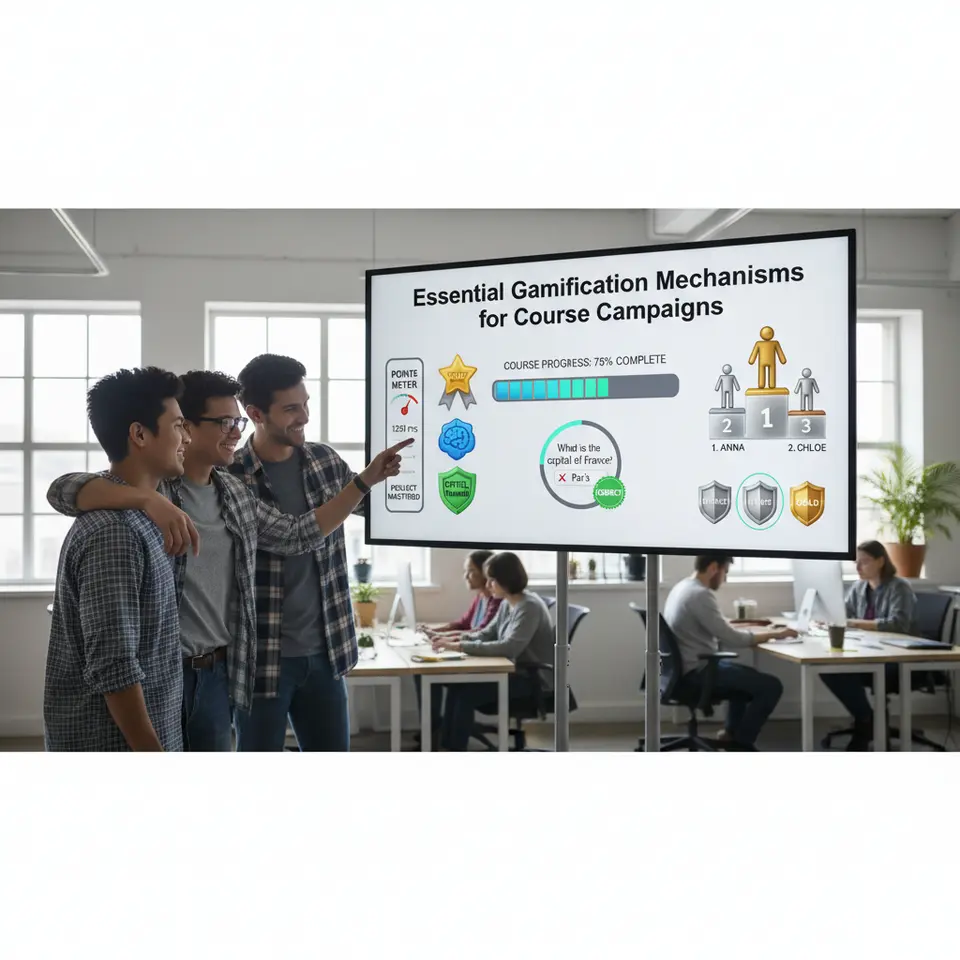
Essential Gamification Mechanisms for Course Campaigns
To effectively gamify your course marketing, it’s crucial to select the right mix of game mechanics. Here are the most impactful tactics to consider:
- Points & Scores: Assign points for any desired action—signing up for a newsletter, sharing a social post, or completing a knowledge check quiz. Accumulated points provide immediate feedback on progress.
- Badges & Achievements: Create digital badges for milestones such as “First Lesson Completed,” “Top Referrer,” or “Quiz Master.” These collectibles add status and encourage continued participation.
- Progress Bars: Incorporate visual indicators that show how close participants are to unlocking benefits like free modules or discount coupons. Progress bars stimulate a sense of forward momentum.
- Quizzes & Challenges: Design interactive assessments that educate while rewarding completion. Tailor challenges to test knowledge on key course topics and offer bonus points for perfect scores.
- Leaderboards: Showcase top performers to ignite healthy competition. Public recognition on a leaderboard can motivate participants to increase their engagement.
- Levels & Tiers: Structure your campaign with hierarchical tiers (Bronze, Silver, Gold) that unlock progressively better perks, such as private webinars, one-on-one coaching sessions, or certificate credits.
By blending these mechanisms, you can create a rich tapestry of incentives that appeal to diverse learner motivations. For instance, points and badges satisfy those driven by achievement, while leaderboards and social sharing attract competitive spirits. Progress bars and tiers cater to learners who appreciate clear milestones and escalating benefits. This multifaceted approach ensures broad appeal and sustained interest.
Crafting a Seamless Gamified Marketing Experience

Once you’ve identified appropriate gamification tactics, the next step is to integrate them seamlessly into your marketing journey. Below are five critical stages to ensure cohesion and effectiveness.
Define Clear Objectives
Begin by pinpointing your primary goals—whether that’s capturing new email subscribers, boosting live webinar attendance, or driving enrollments for a specialized certification. Each gamified element should serve a direct purpose in achieving these targets. For example, if your aim is to expand your email list, you might offer points for subscription and additional badges for referral-based sign-ups.
Know Your Audience
Understanding your learners’ demographics, interests, and tech comfort levels is essential. Tech-savvy Millennials may relish competitive leaderboards and mobile-friendly mini-games, whereas seasoned professionals might prefer certificate credits or access to exclusive whitepapers. Conduct surveys or user interviews to tailor challenges and rewards that resonate strongly with your specific audience segments.
Choose the Right Mechanics
Select mechanics that align with both your objectives and audience preferences. If you want to build buzz around a launch, a quiz with shareable results can spread awareness rapidly. Conversely, a progress bar that gradually unlocks premium content works well for nurturing leads over time. Avoid overcomplicating your design—stick to two or three core mechanics to maintain clarity and focus.
Integrate Seamlessly
Ensure gamified elements feel like a natural extension of your existing marketing assets. Embed progress indicators directly on landing pages, incorporate point tallies within email drip sequences, and automate badge notifications through your CRM system. Avoid disjointed experiences that force users to switch platforms or sign in repeatedly—smooth integrations minimize friction and boost retention.
Select Tools & Platforms
Various software solutions simplify gamification implementation. For quizzes, consider tools like Interact; for loyalty systems, Captain Up offers robust APIs; and for WordPress sites, BadgeOS provides a flexible framework. Evaluate each option based on your budget, technical stack, and desired feature set. Prioritize platforms with strong security, analytics dashboards, and easy customization to ensure your gamified campaign remains scalable and future-proof.
Tracking Success: Measuring the Impact of Gamified Strategies
Effective gamification isn’t a set-and-forget tactic. Ongoing measurement and optimization are vital to sustain engagement and maximize conversions. Key metrics to monitor include:
- Engagement Rate: Compare click-through rates on gamified buttons and banners versus traditional calls to action.
- Conversion Rate: Track the percentage of participants who progress from game elements to actual course enrollments.
- Time on Site: Analyze how long users interact with quizzes, leaderboards, or progress interfaces.
- Social Shares: Count the number of times participants share achievements or leaderboard rankings.
- Reward Redemption: Monitor how many users claim discounts, certificates, or other incentives.
Complement quantitative data with qualitative feedback—conduct short surveys or user interviews to understand motivations, frustrations, and suggestions. Tools like heatmaps and session recordings can uncover usability pain points in your gamified flow. Use these insights to tweak reward structures, adjust challenge difficulty, and refine messaging.
As noted by the National Institutes of Health (NIH), user engagement analytics provide a window into behavioral patterns that drive long-term success. By iterating based on real user data, you ensure that your gamified campaign continues to resonate, prevents drop-offs, and consistently drives new enrollments.
FAQ
What is gamification in course marketing?
Gamification in course marketing is the practice of integrating game-like elements—such as points, badges, and leaderboards—into promotional activities to increase engagement and motivate learners to take desired actions.
How do I choose the right gamification mechanics for my audience?
Start by defining your marketing objectives and understanding your audience’s preferences and behaviors. Then select two or three core mechanics, such as quizzes for knowledge checks or progress bars for milestone tracking, that align with both your goals and learner motivations.
Which metrics are most important for measuring gamified campaigns?
Key metrics include engagement rate, conversion rate, time on site, social shares, and reward redemption. Analyzing these metrics alongside qualitative feedback helps you optimize your game mechanics and improve overall campaign performance.
Conclusion
Incorporating game mechanics into your promotional initiatives offers a dynamic way to captivate and convert learners in today’s competitive environment. By placing elements like points, badges, progress bars, and leaderboards at the heart of your strategy, you transform routine marketing into an interactive journey that resonates emotionally and intellectually. Throughout this guide, you’ve learned how to align your objectives, choose the most effective mechanics, integrate them seamlessly, and measure success rigorously.
Ready to gamify your course marketing? Start small by introducing one or two game elements—perhaps a simple quiz or a progress bar—and measure the impact. Then, iterate based on user feedback and data insights. Over time this year (2026), you can expand your gamified ecosystem, unlocking greater engagement, higher conversions, and enthusiastic brand evangelists. Embrace the power of play today, and watch your course enrollments soar.